
In the fast-paced business landscape we see today, staying ahead of the competition is one of the top priorities for many successful business leaders. By tracking and analysing your competitors’ activities, strategies and performance, you can obtain valuable insights into industry trends, helping you make informed decisions that can give you the edge over your competitors. However, we all know manually collecting and analysing data from multiple sources can be a time-consuming and tedious process. That’s where competitor intelligence software comes in. Using competitor intelligence software automates the process of gathering and analysing competitor data, making it more efficient and accurate.
One of the key benefits of using competitor intelligence software is the ability to benchmark your own company against your competitors. By using competitor intelligence software, you can easily access and analyse data on your competitors’ performance, such as their financial metrics, marketing strategies, and customer feedback. Additionally, this allows you to identify areas where your competitors are leading the market, as well as where your company may be falling behind.
Three key reasons leadership teams are using competitor intelligence software for competitive benchmarking include:
As mentioned, one of the benefits of using competitor intelligence software is the ability to identify new prospects and opportunities in the market. By tracking and monitoring your competitors’ activities and strategies, you can gain insights into the industry trends and identify new opportunities that you may have previously overlooked.
For example, if you notice that one of your competitors is expanding into a new market, it may be worth investigating whether this is a viable opportunity for your own business.
Additionally, competitor intelligence software can help you identify new potential partners, suppliers or customers, by providing you with information about the companies that your competitors are working with. By using this information, you can identify new prospects that align with your business goals and strategies, and develop new partnerships that can help you grow your business.
Competitor intelligence software and competitive benchmarking are powerful tools that can help businesses stay ahead of the competition and achieve unprecedented growth. By automating the process of gathering and analysing competitor data, these tools can provide valuable insights into industry trends and help businesses identify new opportunities for growth. By understanding where your company stands in comparison to your competitors, you can make informed decisions about where to focus your efforts and improve your performance.
Competitor keyword research is an essential aspect of any business and marketing strategy. By analysing the keywords your competitors are using, you can gain valuable insight into what topics are most relevant to your industry and target audience.
Competitor keyword research can help gain a competitive edge by helping you understand the strategies and tactics your competitors are using to attract and engage with their target audience. By identifying their strengths and in turn, their weaknesses, you can develop more effective business strategies to gain a competitive advantage in your industry.
Using competitor keyword research in your marketing strategies is the key to improving, optimising, implementing successful marketing and content strategies, driving more traffic to your key marketing platforms.
The first step in competitor keyword research is to identify your main competitors. You can use tools such as Google AdWords Keyword Planner to find websites that are ranking for the same keywords you are targeting, or simply look for businesses that offer similar products or services in your industry.
Once you have identified your competitors, the next step is to analyse their website. Look at their meta tags, title tags, and header tags, as well as the content on their website. This will give you an idea of the keywords they are targeting and how they are positioning their brand.
There are a variety of tools (such as KnowFirst!) available that can help you research your competitors’ keywords. These tools can provide you with information on the keywords your competitors are targeting, their search volume, and the estimated cost per click for those keywords.
Once you have completed your initial competitor keyword research, you should repeat the process on a regular basis. This will help you stay up-to-date on the latest trends and strategies in your industry and make adjustments to your own marketing campaigns as needed.
Successfully completing competitor keyword research, as well as utilising platforms such as KnowFirst, can help you continue to gain valuable insight into what topics are most relevant to your industry and target audience.
We had been facing challenges with staying competitive in the recruitment market and keeping up with the constant changes in the job market. Our recruiters were also struggling to gather and analyse the large amounts of data being fed to them from different sources, which was hindering their ability to make informed decisions and find the right candidates.
Recruitment
500-1,000
2014
Private Company
After implementing KnowFirst™ across our Recruitment and Business Development teams, we were able to quickly and easily gather and analyse vast amounts of data, including information on candidates, market trends, and client behaviours. This allowed the team to gain valuable insights and make data-driven decisions, which ultimately led to increased efficiency and improved performance.
One of the biggest benefits was the automation of data collection and analysis based on the companies they were tracking, which ultimately freed up their time to focus on other important tasks, such as sourcing, screening and onboarding new candidates and clients.
"KnowFirst™ helps me when I am researching our competitors and putting together strategic plans. It saves me so much time only having to visit one website. "
C. Morrison, Executive Assistant to the CEO
Furthermore, KnowFirst™ helped us to identify and capitalise on new business opportunities, resulting in increased revenue and growth. An example of this is when one of our Business Development Managers received an alert to notify them that one of our clients had been awarded a new contract with a Government organisation. Knowing they would not have the resources to deliver this contract, our BDM jumped on a call that day and we were able to submit our best candidates within 24 hours.
In short, KnowFirst™ has helped our business stay competitive, as well as helping us continue to drive our team forward by providing them with the insights they needed to make informed decisions and find the right candidates for their clients.
C. Morrison
Executive Assistant to the CEO

From online business meetings to autonomous driving, IoT and AI are becoming a necessity. And with the explosion of AI and data analytics, sourcing key talent has evolved past the traditional ways, such as the use of LinkedIn and Seek. So what does 2023 look like for recruitment and hiring teams?
Right off the bat, recruitment teams should increase their presence on digital platforms to recruit the best talent. Digital tools have evolved over the years and proved incredibly effective, especially for potential candidates who may not be directly looking for a new role.
Using technology, and alternate data sources, in the recruitment process will become a strategic advantage for any hiring professional. Along with recruitment, other tasks such as resume screening, and interview scheduling will become effective through AI, data analytics, and automation. And having access to your decision making data will be a core driver for successful recruitment teams.
Recruitment teams need to focus on their brand to get the best skill set from the market. The velocity and veracity of global IT access keep everyone up to date. In these circumstances, a better brand will attract top talent.
From the employees’ perspective, things like flexible hours, mandatory work-life balance, remote working, etc., are more crucial than monetary benefits. Attractive non-monetary benefits will create a better brand image in 2023.
Another important aspect is to think about the data which drives the decisions of potential talent. Recruiters should go beyond their usual selling techniques, and use the data available to them to help convert candidates into employees. Employee reviews, and the scores, will deeply influence the decisions made by candidates, and having access to this information will be imperative.
The most challenging thing for HR Managers in 2023 will be to retain the talent pool in their business. The key is to know and act upon the needs of employees beforehand. Innovative steps like employer-employee transparency, investment in employees’ professional development, and enhancing leadership skills can give a considerable competitive advantage to a business.
Alternatively, this can also be a great opportunity for recruiters to approach top talent with offers that are more aligned to the candidates needs.
2023 will bring new challenges to both HR and Recruitment teams, requiring new strategies to cope with the further introduction of AI and data analytics. However, with the developments in AI and data, the recruitment process can become efficient and effective.
The top focal point for recruitment teams entering 2023 will be to use digital tools in efficient ways, helping to develop their brand and use it to hire the best possible candidates.
2023 has started with a bang, and we have seen many digital advancements during 2022 that will become more refined in the year to come. From moving 3D billboards to drones supplying goods, sales dynamics in 2023 will surely continue to transform.
Undoubtedly, today’s business cannot survive without a strong and positive digital footprint. This digital transfusion has created a virtual environment where everyone is the market player, and the consumer knows what he wants.
Although every great sales professional follows their basic sales dynames and principles, the use of digital platforms has been able to influence their pitch intelligence to ensure every interaction they have with their clients counts. With most industries being highly competitive, sales professionals don’t have the opportunity to make mistakes. You cannot fool an educated customer, whether you have him or not. On the contrary, a sales professional who truly understands the market they are playing in can win countless new customers.
Companies are now utilising onboarding professional social media marketers with many payments offers to maintain and improve their pitch intelligence strategies. These platforms ensure the sales team, along with marketing, HR, recruitment and other operations teams, capture and present the most up-to-date and reliable data to help increase sales dynamics. Using these platforms, sales professionals are able to see the impact of their pitch campaigns immediately.
Ultimately, a sales team’s presence to source reliable and up to date prospect intelligence is the key to getting the maximum market share. Accessing all of the information they need on their prospects in one location is now a reality that once seemed just a dream.
Big data and data analytics has become the need of every business. Analysing and implementing the insights which have been identified by the data is going to be a crucial skill needed by the sales professionals entering 2023. Utilising the raw and scattered customer data into meaningful and useful pitch campaigns will help them understand your market in more depth, as well as understand their key stakeholders.
By extracting extensive data on your customers, sales professionals can devise customer-centric marketing and sales campaigns. In a data-driven world, identifying and presenting meaningful data using competitive intelligence tools can be an incredibly efficient and effective way to enhance the customers’ experience in the most custom way.
The perfect example of improving customers’ experience through data is the two giants, Amazon and Ali-Baba. Both companies provide you with the best personal experience in a virtual world. You will be shown the things of interest every time you browse their website or mobile app. This is only possible through high-level data analytics to improve your sales dynamics.
The biggest challenge for companies entering 2023 is to hire the perfect talent in their sales department who can take them to the skies. The times have changed, and traditional sales campaigns won’t be so successful in the years to come.
A sales team member who knows how to manipulate customers’ data and use it in favour of customers and the company will be the ideal talent for the team. So, learn digital skills to become invincible.
We have entered the booming era of digitalisation and automation, which is now the new normal sales professionals need for 2023 and beyond. As the data world continues to change, it is important to merge traditional selling techniques to include the use of digital data-driven platforms to have a far-reaching experience.
We all have seen unbelievable changes in the dynamics of business and sales operations. As a result, many companies and businesses have a lack of vision in their competitive analysis strategies.
The traditional marketing and selling techniques have long gone. They are not only vintage in competitive strategies but are expensive and time consuming to follow. Understanding and utilising the latest technological tools and digital platforms should be the first and foremost strategy to consider for your business to take flight in 2023.
Traditional marketing techniques such as promotional pamphlets and big para flexed billboards don’t have a cost-benefit equilibrium. Especially for anyone considering their ROAS. A few seconds of video on YouTube, Instagram, and Facebook may significantly impact sales within half the budget, and being able to see the direct correspondence between the platforms and your sales ensure you can achieve your set KPIs.
Being able to compare your own metrics to your competitors will also help you understand your own unique selling points and areas for improvement, helping you develop a more effective competitive strategy.
The events from the past few years have proved to be a game-changer in almost every aspect of business life, and the impact on sales and marketing are no exception.
Challenges facing your sales and competitive analysis strategies in 2023 include:
Despite these challenges, it is still important for companies to regularly conduct competitive analysis to stay ahead of the curve. By leveraging the right tools and techniques, businesses can overcome these challenges and develop effective competitive analysis strategies.
Executives typically want to know a wide range of information as part of a competitive analysis, including:
By gathering this information, executives can make informed decisions about how to position the company in the market, develop strategies to stay ahead of the competition, and drive business growth.
One thing is for sure, the digital era is not going anywhere. It will progress and the best way to get a competitive edge is to embrace this quick change and use the data available to you to your advantage .
Track and analyse your competitors while decreasing your research time by 50%.
Prospecting for new clients isn’t easy. Certain tools (like ours!) make it easier, but most sales professionals will tell you that prospecting is one of the hardest parts of the sales process.
Most markets these days are saturated with products, tools and services. An average person can see up to 10,000 marketing messages per day. No wonder people are playing hard to get, because, let’s be honest, they are overwhelmed with their choices.
Your prospects are spending more time researching and analysing opportunities, with research showing that 94% of B2B buyers use the internet before making a purchase. But don’t despair, it just means your buyers are well-informed of their choices and have done some of your work for you.
Research shows that successful sales professionals spend 4 or more hours a day on sales-related prospecting. By spending the time needed to identify, research, personalise and contact key prospects you can ensure you have a sales pipeline full of leads, higher chances of conversion, and better win rates!
Your prospecting game plan will demonstrate the difference between top-performing sales professionals and everyone else. If done right, your polished sales skills will convert more clients, in less time, with a higher ROI.
What does your ideal client look like? Use your top 5 clients, worst 5 clients, and your 5 most profitable clients to help you build a picture of who you should be targeting (and who you shouldn’t), what their interests are, and where you can find them.
Also, consider the problems your prospects are facing. What pain points does your prospect have, and what does your solution solve for them? Once you have created your ideal prospect profile, the real fun begins!
Creating your prospect list can be tiresome but incredibly rewarding. There is nothing better than moving a prospect through the sales funnel, one step at a time. Use your research time to:
Track and analyse your competitors while decreasing your research time by 50%.
You are now equipped with all the knowledge you need to start tackling the list, one prospect at a time. Whether it be a phone call, a personalised email, or even directly approaching someone at a conference they are also attending, it is time to prioritise your cold, warm and lost list.
Top tip – write down some open-ended questions for your prospects. Let them discuss their pain points, their needs and wishes, and where they are in their decision process. The more information you can gather, the more opportunity you have to provide a solution that lines up directly.
Never miss an opportunity to ask for a referral. There are numerous times within your sales process, and following your solution implementation, when you should be asking for referrals. If you deliver a quality product or service, your prospects will bend over backward to refer you to their colleagues.
The sales industry isn’t exactly known for its trusting personalities. But we can change this perception one sales professional at a time. By knowing a lot about everything, you go from a ‘salesperson’ to an ‘expert in the field’. And experts are trusted, no matter what industry you are in.
Here comes the good part… If you have done all the research you should have done, you should be an expert already! But don’t just stop at the knowledge you need on your prospect, make sure your expertise extends to the industry and your own product.
Whether we like it or not, your activity on your social media platforms can help you seal the deal (and sometimes turn your prospect away, but let’s stay positive over here!).
Did you know – Using social selling tools can increase win rates by 5% and deal size by 35%
Here’s the catch though. A social media presence adds to your prospecting arsenal and doesn’t replace your other sales prospecting tools.
Your prospects are time-poor and are often navigating multiple projects. Following them up puts you front of mind once again. Your follow-up is also a great way to build your relationship and provide them with any additional information they may have forgotten to ask you.
Whether it is a casual check-in, thank you or product update, following up with your prospects increases your chances of converting those prospects into paying clients.
Do you need to conduct a competitive analysis? Do you have any idea where to start, let alone know how to do one efficiently?
The key to conducting a successful competitive analysis does not happen by just taking a quick look over their website and LinkedIn page. If you do this, you may be able to put together some interesting information on what they want you to think they are like. But what do these mediums not tell you? And how can you use this information to your advantage?
Conducting a competitive analysis can help you, your colleagues and other key stakeholders learn absolutely everything about how your competition works. The best part? A great competitive analysis will also be able to identify potential opportunities where you can out-perform them. As a bonus, it also helps you remain in the loop with industry trends, upcoming players and identifies shifts in best practices.
So your boss asked you to complete one, but you don’t see the point? Unfortunately, we agree with your boss in this situation. A competitive analysis is important, really really important. Why? Here are four key outcomes when completing your competitive analysis. These include:
Track and analyse your competitors while decreasing your research time by 50%.
There are two types of competitors to consider.
This should include their pricing strategy as well as the quality of the product or service they are offering their customers. Don’t forget these key questions:
Did you manage to find the answers about your competitors’ products and services? Now you can start scoping out the rest of your competitors’ efforts!
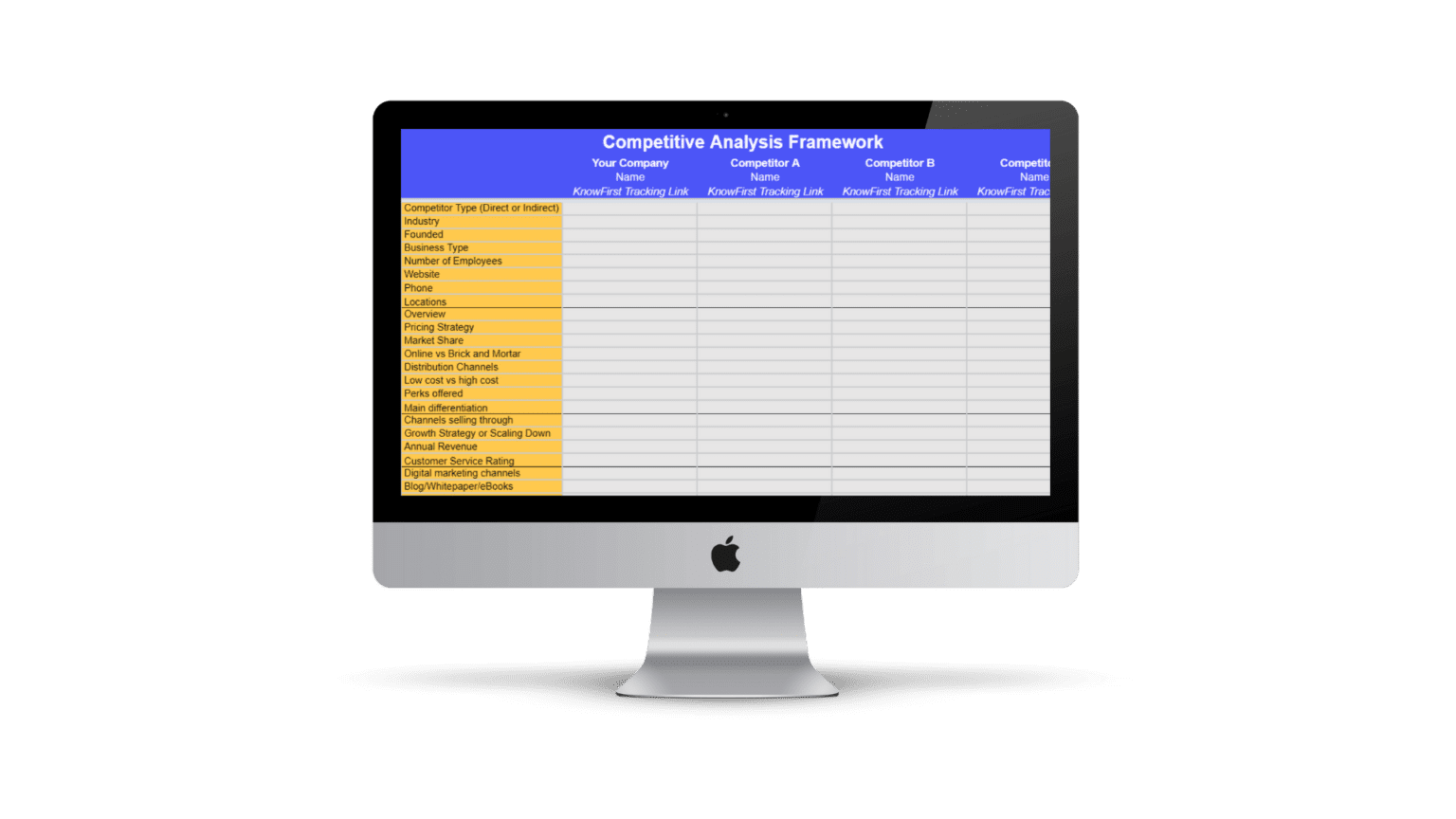
This is where your competitive analysis can get a bit tricky and finding all of the information can be quite time consuming (unless you are a KnowFirst™ premium subscriber of course!). Answering these questions will give you an idea of how competitive the sales and marketing strategies are, ultimately giving you a big picture of what your competitors stand for and how you can charge your own strategies to excel past them.
Start by finding answers to questions such as:
And when it comes to their marketing, look to answer:
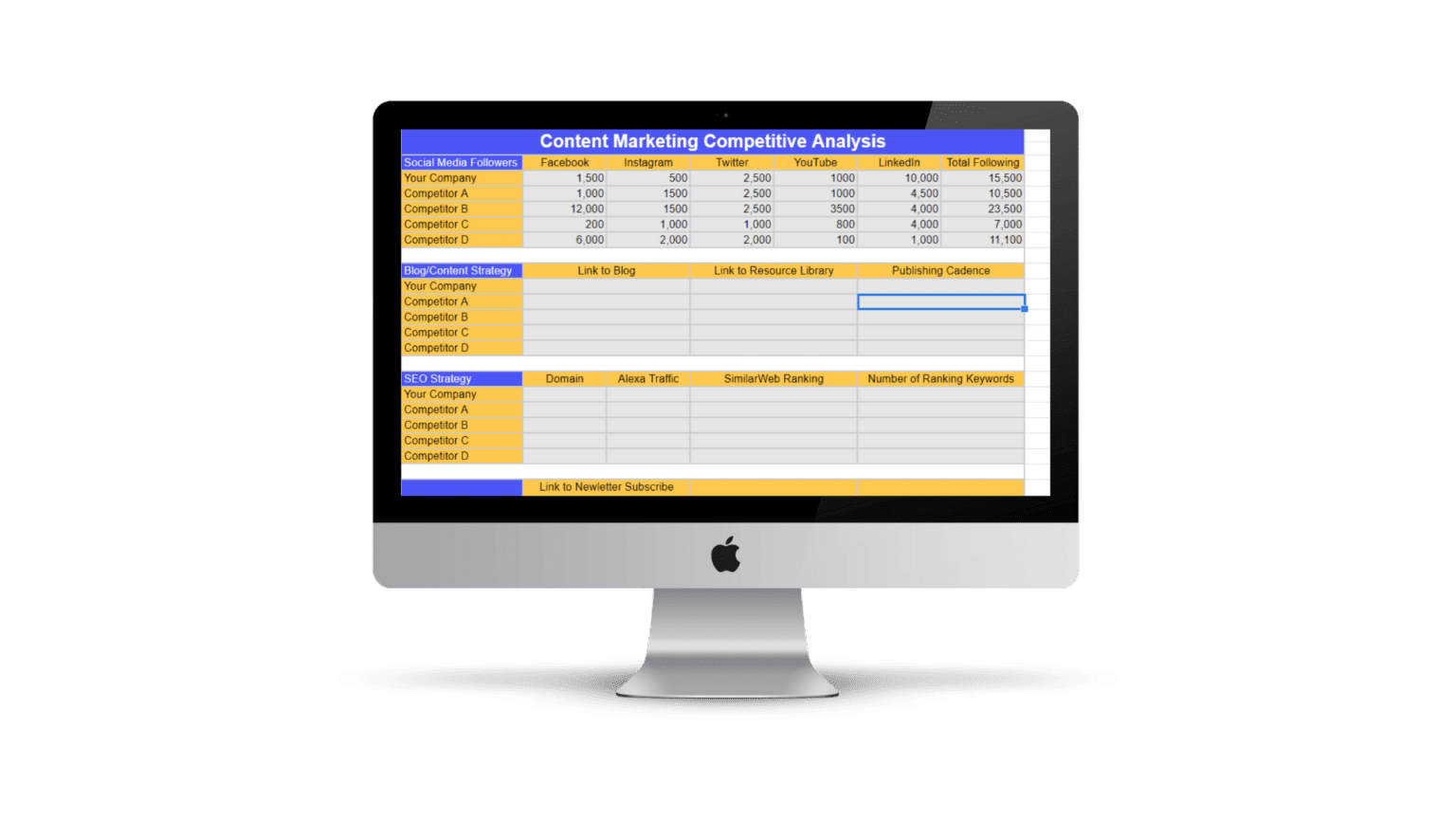
Content will be king for a lot of industries, and often creates a large amount of in-bound traffic for your digital channels. Analysing your competitors’ content can also give you an idea of their overall brand and target audience. Top considerations should be:
Social media, and other digital platforms, continue to drive engagement and authority for most organisations. Key questions to ask include:
And the big question you should ask: How does your content compare?
By analysing your competitors’ social platforms, you can truly get an idea on who their target and what their priorities are. Are they focused on growing a particular product or service? Do they draw people in with competitions and free offers? How engaged are their clients in interacting with the brand?
Being able to beat your competition requires knowing as much as possible about them. And their tech stack is often a breadcrumb trail, leading you to insights into their strategies and key differentiators.
So what can their tech stack tell us?
By having access to this information, you can arm yourself with everything you need to outperform their processes.
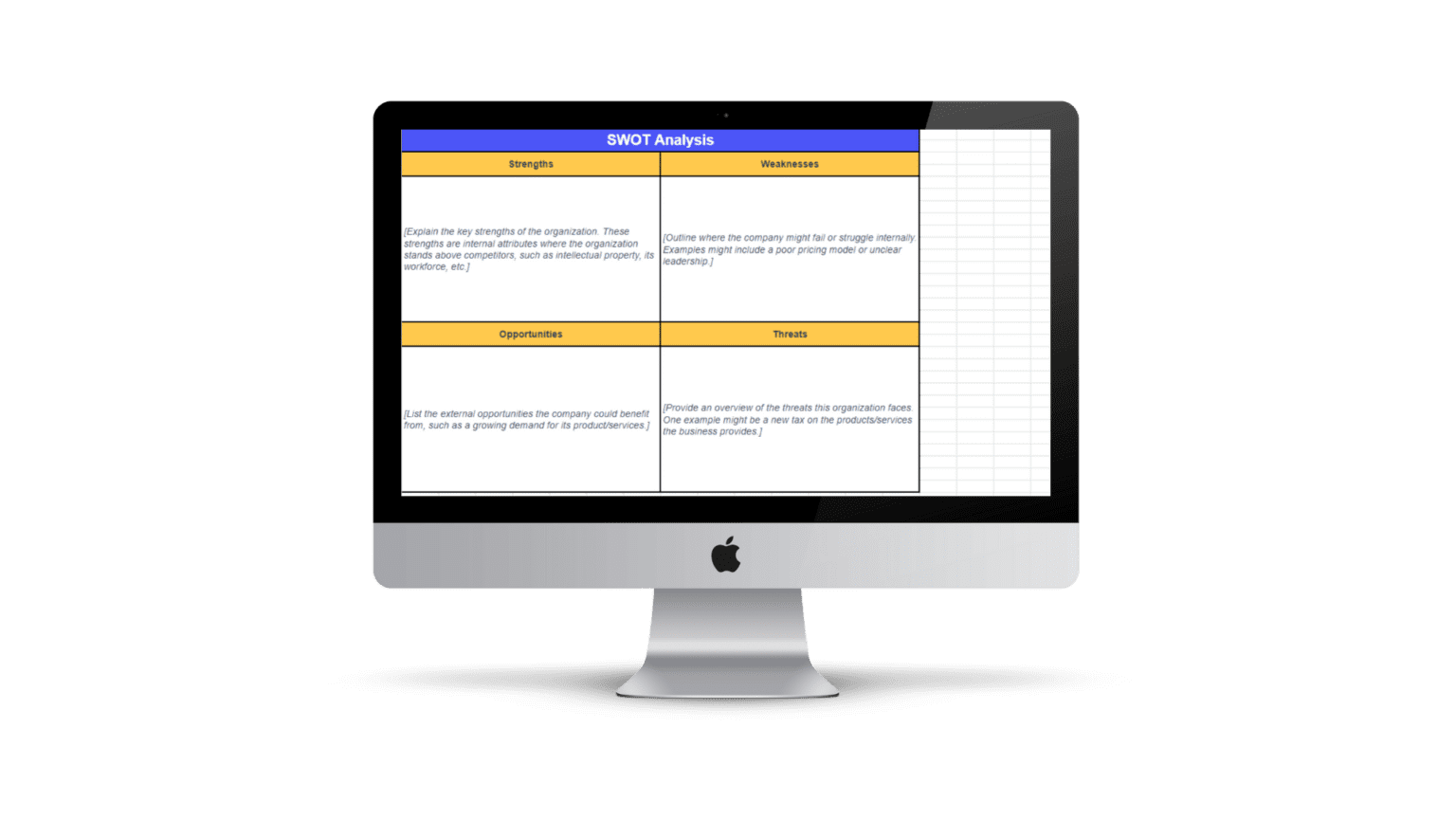
If you have gotten all the way to this step, you probably feel like you know everything you need to about your competition. And this is why your SWOT analysis is one of the most important steps. It puts all you have learnt together and compares their weaknesses against your strengths and vice versa.
Some key questions to get you started:
By asking open-ended questions, you’ll have honest feedback about what customers find appealing about your brand and what might be turning customers away. Ultimately you can better position your company, and start to uncover areas for improvement within your own brand.
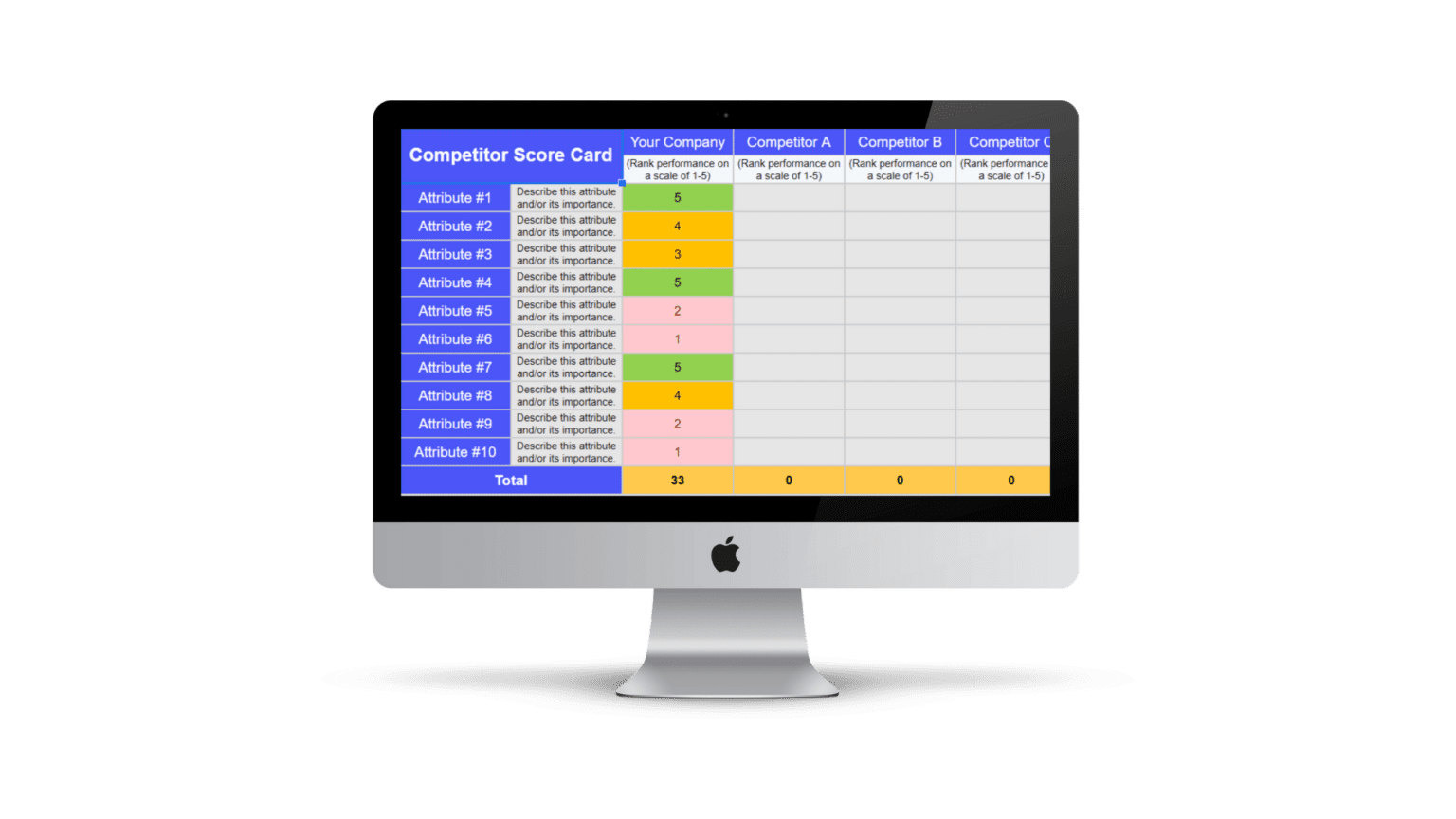
Through your competitive analysis, you have taken a significant amount of time looking at your competition. But how do you stack up against their business, sales and marketing endeavours? By comparing your own metrics to those of your competitors, you can establish a baseline and accurately compare and contrast all of the data available.
Track and analyse your competitors while decreasing your research time by 50%.
Identifying your competition may seem like a daunting task, and a task that no one seems to want to do (even when they 100% have to). It is also the first step in conducting a full competitive analysis, which we all know is imperative to the success of any business.
But where do you start? How do you even start to define your competitors when there are millions of companies out there?
First things first. When you identify competitors, you have three types to consider: direct, indirect, and replacement. Oh wait, we mentioned four didn’t we? Thanks to the explosion of digital assets, we now have our digital competitors!
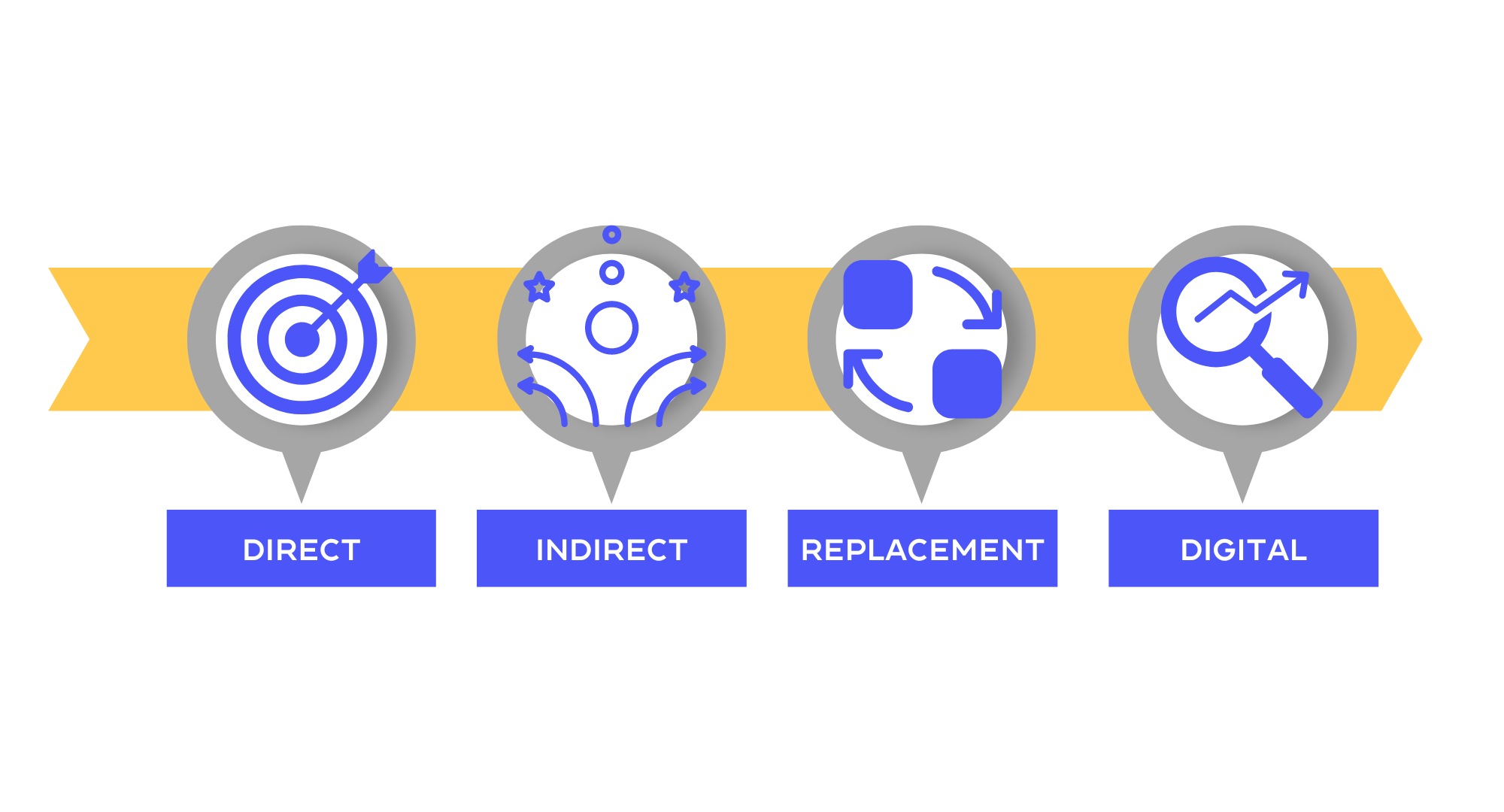
Your direct competitors are those that offer the same product with the same goal as your own. If you consider the needs of your customer, you will nearly always evaluate you against your direct competitors before making a purchasing decision.
A great example of this is Coles vs. Woolworths → Check them out on KnowFirst™
Indirect competitors can be a lot more broad as they offer a product or service that is in a different category altogether, but which is often seen as an alternative purchase choice.
McDonalds vs Dominos are indirect competitors → Check them out on KnowFirst™
Replacement competitors offer an alternative product or service to the one you offer, but one which your customers could choose to spend their money instead.
One sells books, one sells video games, both are replacement competitors, Dymocks vs EB Games → Check them out on KnowFirst™
This one may be a little controversial, and isn’t seen in many of the textbooks used in our universities. But considering how your competitors are represented in our digital world should be at the top of your list. So who are your digital competitors? These are the ones that compete against you in your digital results. Your digital competitors may also fall into your direct, indirect or replacement competition, but their digital presence versus yours is the defining element.
AirBNB vs Hotels Combined are perfect examples of digital competitors → Check them out on KnowFirst™
No matter your product or service, sourcing the information on your competitors can be time consuming and stressful. But in order to stay relevant, you need to listen to your customers and employees, watch for trends and changes, and adapt your own model to suit the ever-changing consumer landscape.
We used to Google our own company from time to time just to see what people are saying about us, as well as using Google to find information about our competitors. Most of the time, this was just out of curiosity, admiration or simply to keep tabs on what they’re up to. Since working with KnowFirst™, we now know a competitor analysis is more than just Googling your competitors to see ‘what they’re up to’.
Construction
5,001-10,000
2002
Private Company
We used to compete a competitor analysis every years as part of a Board obligation, and found it to be very time consuming. The information found also added very little benefit to what the team was trying to achieve. Our mindset on this has now changed since having access to KnowFirst™.
One example of the power of a well constructed competitor analysis our team utilised was when we had an opportunity with a prospect which required a presentation and a proposal to win the business. The standard practice for us prior to using KnowFirst was to use templated proposals and presentations to highlight features and benefits of our service. It was filled out with the prospects name but there was a limited amount of information that was tailored or used to differentiate.
It was just like everyone else’s proposal.
"Since using KnowFirst™, we are now able to reveal insights of the market and demonstrate how we understand the market. This has set us apart from the competition and provides us with an opportunity to show true value."T. Bahemia, COO
We use KnowFirst™ to gain valuable information on what the competitors were offering the market by using the marketing information such as offers, promotion and discounts. With the knowledge of their competitors’ trademarks and contracts it provides an insight as to where competitors are targeting their efforts and if they have any competitive advantage that will need to be overcome. Having more information and data on competitors allows us to tailor a proposal and presentation to promote our strengths over the competition as well as counter any advantages competitors have over us.
Additionally, we were able to develop insights based on the historical activity of our prospects and competitors by using the timeline function that displays historical trends in data such as employee and client reviews, social media activity, employee tenure, employee turnover and more data points that assist in building a clear picture of their needs.
Being able to demonstrate to our clients and prospects that we have an understanding of their business, needs, problems and opportunities, provides a better opportunity to clearly position your business away from competitors and show the value your organisation can deliver.
T. Bahemia
COO

Data is most useful when it’s used to support a decision. In a data driven world, there is more data and information available at our fingertips (quite literally). This has created huge opportunities but also a great deal of complexity and challenges as to what to do with the data. Much data available on the internet isn’t verified which creates a greater need for vigilance and caution when using data.
Data becomes valuable when it’s part of a decision or action. There’s a distinction between ‘interesting’ and ‘useful’. No doubt it’s interesting to most of us that around 1.4 million people visit Movie World on the Gold Coast each year, but is it useful to us? Probably not. It’s just interesting. However, if I’m a Manager at Movie World it’s likely that this data is used to plan infrastructure. They’ll put the data to use to assist decision making.
Large mining equipment have hundreds of sensors on all parts of the machine collecting all types of data from oil temperature and pressure to vibrations and engine emissions. This data is available in real time and is also stored for analysis. Unless the data is analysed to look for changes or trends away from normal conditions, the data is useless. It only becomes valuable when the data is turned into information that can support a decision for action that arrests the change in condition.
Like oil has changed the way humans operate, living in a data driven world will continue to change us as both individuals and as a society. The abundance and ease of access to information allows us to make more informed decisions, but it also means that our actions and behaviours are more easily tracked and analysed. This can lead to a greater emphasis on data-driven decision making. Additionally, the use of data in areas such as sales and talent can change innate behaviours like we have never seen before. It is important for us to consider the ethical implications of living in a data driven world and to strive for fairness and accountability in the use of data.
There have been thousands of books and articles written on ways to stay ahead of your competition which suggests there’s no ‘one way’ to do it. It’s worth reading as much as you can on the topic as every bit of information can add to your arsenal of knowledge and tactics to stay ahead of your competition. It’s also worth bearing in mind that your competition is probably doing the same thing. At KnowFirstTM we have just three really simple concepts that will give you an edge.
There is nothing worse than being blindsided by a competitor who has launched a new product, advertising campaign or sales tactic. Being aware of your competitors’ activity may not prevent them from any of that. But it will however allow you to plan for your response or to take action as early as possible to limit the effect of their actions.
In many industries companies will forge away at what they do best and compete in the markets they know well. The greatest opportunities can arise through a discussion with your clients or prospects about what challenges they have and what could make their life easier. Regular engagement with stakeholders and customers will uncover little pockets of opportunity in the form of unfulfilled needs and unresolved problems. New products, services or even a ‘tweak’ to your existing service or product can be the difference between you and your competitors.
Sounds really simple. And it really is. There’s a saying that goes “if you don’t look after your customers, your competitors will ”. The key is to understand your customers’ sentiment toward you and your service / product and that way you can address any concerns they might have. There a three commonly used metrics to know:
Track and analyse your competitors while decreasing your research time by 50%.